CHAS Health and Safety Accreditation: What It Actually Checks (And What It Doesn't)
CHAS health and safety accreditation checks your company paperwork against the SSIP core criteria — not CSCS cards and not your site. See exactly what's assessed.
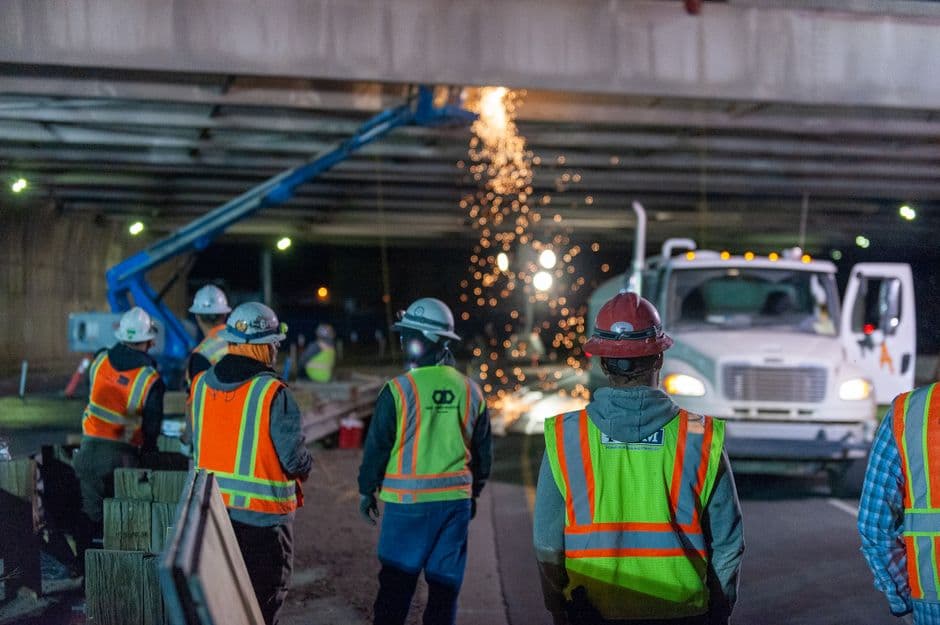
If a main contractor has asked you for CHAS health and safety accreditation and you are picturing an inspector turning up at the job, relax — that is not what happens. CHAS health and safety accreditation is a desk-based review of your company's health and safety paperwork against the SSIP core criteria. An assessor reads what you upload. Nobody watches you work, and nobody checks your lads' cards one by one.
TL;DR
CHAS health and safety accreditation is a company-level, desktop assessment of how you manage health and safety: your written policy, your arrangements, who gives you competent H&S advice, training records, RAMS and COSHH examples, accident statistics and insurance. It does not test individual worker competence (that is what CSCS and trade qualifications do), it does not involve a site visit, and it does not judge whether you can actually wire a distribution board. CHAS itself says a compliant contractor has met a threshold standard and that health and safety legislation requires the client to undertake a second-stage, job-specific assessment — "CHAS cannot do this for you" (CHAS FAQ, checked 06/11/2026). The practical consequence: passing is mostly about the wording and dating of documents you probably half-have already, not about buying new kit or changing how you work.
What does CHAS health and safety accreditation actually assess?
CHAS is a founder member of Safety Schemes in Procurement (SSIP), so its health and safety assessment is built on the SSIP core criteria — the HSE-recognised threshold standard every SSIP member scheme assesses against. Reading the criteria is the single most useful hour a subcontractor can spend before applying, because they tell you exactly what an assessor is told to verify.
The criteria cover, in plain terms:
| SSIP core criterion | What the assessor wants to see |
|---|---|
| H&S policy and organisation | A policy with a statement of intent signed by the Managing Director or equivalent and dated within the previous 12 months, plus who is responsible for what |
| Arrangements | Written procedures for how you actually manage the risks in your work — proportionate to your size and activities |
| Competent advice | A named competent person, internal or external, with construction-specific CDM knowledge |
| Training and information | A sample of training records for employees and labour-only subcontractors |
| Individual qualifications and experience | Examples of relevant qualifications held across the business |
| Monitoring, audit and review | How you check and improve your own performance |
| Workforce involvement | Evidence you consult your workers on H&S |
| Accident reporting | Accident, incident and RIDDOR statistics for the last 3 years |
| Subcontracting procedures | How you vet and monitor anyone you appoint |
| Risk assessment to safe system of work | Project-specific risk assessments, method statements and COSHH assessments from the last 12 months |
CHAS layers its own topic headings on top of this — its published health and safety assessment standards document runs through areas such as working at height, health surveillance, fire risk assessment, asbestos, welfare and sub-contracting. That document on chas.co.uk is dated May 2019, so treat the headings as indicative of the shape of the assessment rather than the current question-by-question wording, and work from the live SSIP criteria plus whatever CHAS puts in front of you in the portal.
What does CHAS health and safety accreditation not check?
This is where most of the confusion lives, and it matters commercially, because subcontractors turn up to site assuming the CHAS certificate replaces something it does not.
| CHAS H&S assessmentCompany level | CSCS cardIndividual level | Site inspectionProject level | |
|---|---|---|---|
| Checks your written H&S policy and arrangements | ✓ Yes | ✕ No | ✕ No |
| Proves one named worker's trade competence | ✕ No | ✓ Yes | ✕ No |
| Involves anyone visiting the job | ✕ No | ✕ No | ✓ Yes |
| Judges the quality of your installation work | ✕ No | ✕ No | ✓ Yes |
| Reviewed by a desk assessor from uploaded evidence | ✓ Yes | ✕ No | ✕ No |
| Renews annually | ✓ Yes | ✕ No | ✕ No |
Three specific things CHAS health and safety accreditation does not do:
- It doesn't replace CSCS or trade qualifications. The SSIP core criteria ask for examples of relevant qualifications at company level. Constructionline's Once For All Health & Safety SSIP question set (October 2025) is explicit about the format — it asks for examples such as CSCS, SMSTS, SSSTS, IPAF, asbestos or first aid, and the number or percentage of people who have passed a construction H&S test such as the CITB touch-screen test (Once For All SSIP question set, checked 06/11/2026). That is a sample, not a card-by-card audit. Site access still depends on the card in each worker's pocket — see our guide to CSCS card validity and expiry.
- It isn't a site safety audit. The assessment is a document review. CHAS says a submitted assessment is assigned to an assessor and reviewed within a maximum of 10 working days, with a Fast Track option reducing that to a maximum of 2 working days (CHAS FAQ, checked 06/11/2026). Nothing in that process involves anyone standing on your scaffold.
- It isn't a guarantee for a specific job. CHAS's own client-facing answer is unambiguous: a compliant contractor has met the threshold standard, and the client must still do a second-stage, job-specific assessment.
What does "adequate H&S management" look like for a 3-person firm?
The phrase that panics sole traders is "health and safety management system". For a small subcontractor it means a handful of documents that say what you already do. The SSIP criteria explicitly require arrangements to be "appropriate / proportionate for the size of business assessed and the kind of work they undertake".
There is a genuine concession for the very smallest firms: under criterion 10, a supplier employing four or fewer personnel that does not have written arrangements should be able to describe how it identifies hazards and completes risk assessments and safe systems of work. That mirrors the law — the Health and Safety Executive states that every business must have a policy for managing health and safety, but you only have to write it down if you have five or more employees (HSE: Prepare a health and safety policy, checked 06/11/2026).
A worked example: the policy a 3-engineer electrical firm would pass on
Take a limited company with a working director and two employed electricians doing commercial maintenance — small boards, emergency lighting tests, remedials, occasional work at height off a podium. Here is the shape of the document that satisfies criterion 1 and criterion 2, illustratively:
- 1Statement of intent — half a page. Commitment to managing risks arising from the work, signed by the director with their name, position and a date inside the last 12 months. The date is the single most common technicality: a statement signed in 2023 fails even if the words are perfect.
- 2Organisation — one page, named people. "Overall responsibility: [director name], Managing Director. Day-to-day responsibility for site RAMS and toolbox talks: [name]. Employees: follow RAMS, report defects and near misses." Three names, three sets of duties. Not an org chart.
- 3Arrangements — the bulk of it. A short paragraph each on risk assessment, consultation with employees, safe plant and equipment, information and supervision, training, accidents and first aid, monitoring, emergency and fire procedures, asbestos, welfare and how you meet your contractor duties under CDM 2015. The Once For All question set lists broadly this set of arrangements, plus one health topic and one safety topic specific to your trade — for an electrical firm, manual handling and safe isolation or work at height are the obvious picks.
- 4The evidence that backs it up. Two or three project-specific risk assessments and method statements from the last 12 months, a COSHH assessment for anything hazardous you carry, training certificates for the three of you, employers' and public liability certificates, and three years of accident figures — "nil" is a perfectly good answer, as long as you say it.
Nothing in that list requires a consultant. It requires an evening and honesty about how you work. Our walkthrough of the health and safety policy small contractors need to pass CHAS goes section by section, and the CHAS documents checklist lists what to have ready before you open the portal.
Does CHAS health and safety accreditation expire?
Yes — and there are two dates, which is the bit that catches people out. CHAS distinguishes between membership (the annual subscription and payment date) and compliance (the certificate from the assessment, which has its own annual renewal), describing membership expiry as your annual payment date and compliance expiry as your annual assessment renewal (CHAS FAQ, checked 06/11/2026).
| Date | What it is | What lapses if you miss it |
|---|---|---|
| Membership expiry | Your annual subscription payment | Portal access and membership benefits |
| Compliance expiry | The anniversary of your assessment | The certificate the main contractor is actually asking for |
On top of those sit the dates on the evidence itself: insurance certificates, training and card expiries, and the signature date on your policy statement of intent, which needs to be inside the previous 12 months every time you are assessed. See accreditation renewal deadlines for how these stack up across schemes, and how much CHAS costs for the fee side. The wider evidence picture sits under our accreditation documents hub.
Frequently Asked Questions
Is CHAS health and safety accreditation the same as a CSCS card?
No. CHAS health and safety accreditation assesses your business's health and safety management system against the SSIP core criteria, while a CSCS card evidences one individual worker's training and qualification for a specific occupation. Main contractors routinely ask for both, for different reasons, and one never substitutes for the other.
Does CHAS visit my site or inspect my work?
No. The CHAS health and safety assessment is a desk-based review of evidence you upload; CHAS states that a submitted assessment is reviewed by an assessor within a maximum of 10 working days, or 2 working days on Fast Track. Judging the quality and safety of the work on a particular job is the client's second-stage, project-specific assessment, which CHAS says it cannot do for you.
Do I need a written health and safety policy if I only employ two people?
The Health and Safety Executive says every business must have a policy for managing health and safety, but only businesses with five or more employees must write it down. For an SSIP-based assessment such as the CHAS health and safety assessment, the core criteria still ask the assessor to verify a policy with a statement of intent signed and dated within the previous 12 months, so small firms applying should produce a written policy regardless of the legal minimum.
Does passing CHAS prove my company is competent?
It proves you have met a recognised threshold standard for managing health and safety. CHAS's own guidance for clients is that health and safety legislation requires a second-stage, job or project-specific assessment on top, and that CHAS cannot carry that out. Treat the certificate as the gate pass, not the whole competence case.
Who counts as an employee for the CHAS assessment?
CHAS defines the employee number as total direct employees — PAYE, permanent, temporary and part-time — plus labour-only subcontractors, while bona fide subcontractors operating as companies in their own right with their own tools and insurance are excluded. That number affects which questions and thresholds apply, so get it right at application.
Before your next assessment anniversary comes round
You now know the CHAS health and safety assessment turns on documents being current and correctly dated — a statement of intent signed inside the last 12 months, RAMS and COSHH examples from the last year, live insurance certificates — and that you are juggling two CHAS dates plus every expiry on the evidence underneath them. TradeComply tracks every accreditation's renewal date with reminders at 60, 30 and 7 days by email and calendar, and keeps the policy, insurance, RAMS and training records in one evidence vault, uploaded once and reused for every scheme that asks — with share links so a main contractor gets current certificates without the email chain. If that sounds useful, the page has the detail; if it doesn't, the policy structure above still gets you through the assessment on your own.
Sources
- ssip.org.uk — checked 06/11/2026
- chas.co.uk — checked 06/11/2026
- hse.gov.uk — checked 06/11/2026
- constructionline.co.uk — checked 06/11/2026
- chas.co.uk — checked 06/11/2026
Scheme fees, tiers and question sets change. We re-check our sources and date every guide — how we keep this current.
Related
Pillar · DocumentsContractor Compliance Documents: The Complete ChecklistTwo CHAS dates, one evidence pack — kept in one place
TradeComply tracks your CHAS membership and compliance renewal dates with reminders at 60, 30 and 7 days, and keeps your policy, insurance, RAMS and training records uploaded once and reused for every scheme that asks.
30 days free, then £9.90 a month or £99 a year. Cancel any time. Your documents stay exportable either way.